The Process
In this project, Mikaela embraced Slow AI as both a practice and an attitude.
Every image you see is AI-generated, but created through a process that mirrors a traditional editorial photoshoot. It began with a clear concept and precise art direction: developing the visual world, building a detailed shot list, and curating each look — outfits by Vietnamese designers, paired with makeup and accessories.
Mikaela first created her AI twin, then produced each image in the series one by one. From there came a careful process of retouching, shaped by her family's input: how the food should be presented, which cutlery belonged on the table, the exact shade of my earrings.
Some images came quickly. Others took much longer. She wanted them to feel true — to her parents, and to herself. That became the measure of whether they were finished.
The process was both joyful and painful, especially when personal bias and AI's racial biases surfaced. Tết is a time to slow down, reflect, and prepare for the year ahead. In that sense, this project became a way of reflecting on her relationship with heritage, family, and identity.
Like therapy, the value was never in reaching an answer. It was in staying with the process.
There were tears of joy, despair, and homesickness. Fear of losing her own identity. Of losing years spent away from home. And relief — in finding her way back, in discovering a new way to connect with her family remotely.
At times, the emotions felt unbearable.
AI became the mirror Mikaela held up to see herself up close.
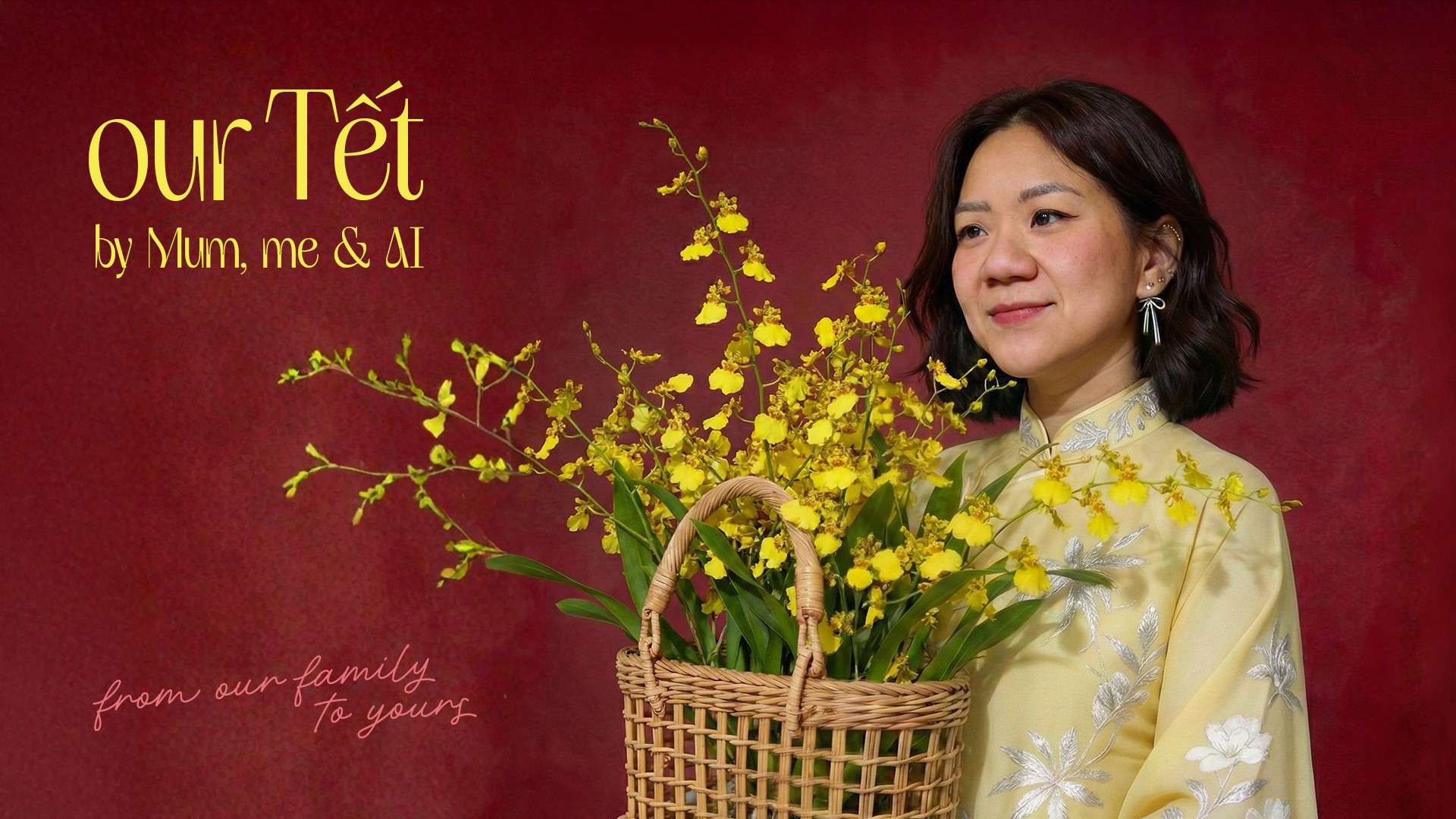
Mikaela Dragon is a freelance Creative and Design Director based in London. Born and raised in Saigon, she has spent most of her adult life building a creative career and a life in London, while her family remains in Vietnam.
Growing up in 1990s Vietnam, Mikaela often felt constrained by rigid gender roles and societal expectations. In search of freedom and self-definition, she distanced herself from parts of her cultural identity — believing distance might offer liberation. Over time, however, that distance created a different kind of conflict: a growing disconnect from her roots, her family, and herself.
The complexity of Mikaela’s relationship with her family shaped her decision to leave home and pursue a career in the creative industry abroad. For years, her work and advocacy for gender equality became both an escape and a language for expressing the parts of herself she struggled to communicate openly.
In 2025, Mikaela’s parents visited her in London for the first time in thirteen years. The visit became a turning point, forcing her to confront long-held fears around vulnerability, acceptance, and cultural expectation. To her surprise, her parents embraced the reality of the life she had built as a creative professional.
This project marks the beginning of Mikaela’s attempt to reconnect with her family, reclaim her relationship with her Vietnamese identity, and find peace within the tension between tradition, womanhood, freedom, and belonging.
Mikaela Dragon is a freelance Creative and Design Director based in London. Born and raised in Saigon, she has spent most of her adult life building a creative career and a life in London, while her family remains in Vietnam.
Growing up in 1990s Vietnam, Mikaela often felt constrained by rigid gender roles and societal expectations. In search of freedom and self-definition, she distanced herself from parts of her cultural identity — believing distance might offer liberation. Over time, however, that distance created a different kind of conflict: a growing disconnect from her roots, her family, and herself.
The complexity of Mikaela’s relationship with her family shaped her decision to leave home and pursue a career in the creative industry abroad. For years, her work and advocacy for gender equality became both an escape and a language for expressing the parts of herself she struggled to communicate openly.
In 2025, Mikaela’s parents visited her in London for the first time in thirteen years. The visit became a turning point, forcing her to confront long-held fears around vulnerability, acceptance, and cultural expectation. To her surprise, her parents embraced the reality of the life she had built as a creative professional.
This project marks the beginning of Mikaela’s attempt to reconnect with her family, reclaim her relationship with her Vietnamese identity, and find peace within the tension between tradition, womanhood, freedom, and belonging.
Mikaela Dragon is a freelance Creative and Design Director based in London. Born and raised in Saigon, she has spent most of her adult life building a creative career and a life in London, while her family remains in Vietnam.
Growing up in 1990s Vietnam, Mikaela often felt constrained by rigid gender roles and societal expectations. In search of freedom and self-definition, she distanced herself from parts of her cultural identity — believing distance might offer liberation. Over time, however, that distance created a different kind of conflict: a growing disconnect from her roots, her family, and herself.
The complexity of Mikaela’s relationship with her family shaped her decision to leave home and pursue a career in the creative industry abroad. For years, her work and advocacy for gender equality became both an escape and a language for expressing the parts of herself she struggled to communicate openly.
In 2025, Mikaela’s parents visited her in London for the first time in thirteen years. The visit became a turning point, forcing her to confront long-held fears around vulnerability, acceptance, and cultural expectation. To her surprise, her parents embraced the reality of the life she had built as a creative professional.
This project marks the beginning of Mikaela’s attempt to reconnect with her family, reclaim her relationship with her Vietnamese identity, and find peace within the tension between tradition, womanhood, freedom, and belonging.
Collaborators:
Mikaela's Mum: food stylist, cultural advisor
Mikaela's Dad: unknown role
Mikaela's Sister: stylist
Paul Robinson: test audience
Edini, Sumire, Lụa Nha Xá: clothing
Nano Banana, Loveart.ai, Google Stitch, Adobe Firefly, Adobe Photoshop, Claude, ChatGPT: AI tools
Collaborators:
Mikaela's Mum: food stylist, cultural advisor
Mikaela's Dad: moral support
Mikaela's Sister: stylist
Paul Robinson: test audience
Edini, Sumire, Lụa Nha Xá: Áo Dài
Nano Banana, Google Stitch, Lovart.ai, Adobe Firefly, Adobe Photoshop, Claude, ChatGPT: AI tools
The Process
In this project, Mikaela embraced Slow AI as both a practice and an attitude.
Every image you see is AI-generated, but created through a process that mirrors a traditional editorial photoshoot. It began with a clear concept and precise art direction: developing the visual world, building a detailed shot list, and curating each look — outfits by Vietnamese designers, paired with makeup and accessories.
Mikaela first created her AI twin, then produced each image in the series one by one. From there came a careful process of retouching, shaped by her family's input: how the food should be presented, which cutlery belonged on the table, the exact shade of her earrings.
Some images came quickly. Others took much longer. She wanted them to feel true — to her parents, and to herself. That became the measure of whether they were finished.
The process was both joyful and painful, especially when personal bias and AI's racial biases surfaced. Tết is a time to slow down, reflect, and prepare for the year ahead. In that sense, this project became a way of reflecting on her relationship with heritage, family, and identity.
Like therapy, the value was never in reaching an answer. It was in staying with the process.
There were tears of joy, despair, and homesickness. Fear of losing her own identity. Of losing years spent away from home. And relief — in finding her way back, in discovering a new way to connect with her family remotely.
At times, the emotions felt unbearable.
AI became the mirror Mikaela held up to see herself up close.